
Home > 3D Lettering Signage > Thermoforming Vacuum Forming Letters
Thermoforming Vacuum Forming Letters


| Material | Acrylic / PETG / HIPS / Polycarbonate |
|---|---|
| Process | Vacuum forming over CNC-routed mould |
| Depth | 1" to 6" (depends on material & size) |
| Illumination | LED front-lit / internally lit channel letters |
| Finish | Painted / Natural / Vinyl faced |
| Height | 4" to 24"+ custom |
Thermoforming & Vacuum Forming Letters in Noida
When a flat sign does not provide enough depth or a conventional fabricated letter does not give you the shape you want, thermoforming and vacuum forming letters can offer another approach to 3D signage.
These letters are formed by heating a suitable sheet material and shaping it over a mould using vacuum pressure. This allows the face of the letter to follow curved, rounded and dimensional forms that can be difficult to achieve with a simple flat sheet.
At Signage Maker, we manufacture custom sign board manufacturer in Noida of thermoforming letters for storefronts, retail branding, commercial buildings, restaurants, hotels, corporate spaces and other signage applications. Depending on the design, available materials include Acrylic, PETG, HIPS and Polycarbonate, with depths from approximately 1 inch to 6 inches and custom heights from around 4 inches to 24 inches or more.
When Does Vacuum Forming Make More Sense?
The biggest advantage of thermoforming is not simply that the letters are 3D. Many different signage materials can create dimensional letters.The real difference is how the shape is created.
A vacuum-formed letter uses a mould to form the sheet into a three-dimensional shape. This makes the process useful when you want:
- Rounded letter faces
- Curved profiles
- Consistent depth
- Smooth formed surfaces
- Illuminated 3D characters
- Repeated letters with the same shape
- Custom logos with dimensional contours
This makes vacuum formed letters particularly interesting for illuminated storefront and facade signage where the shape of the letter itself is part of the design.
Thermoforming vs Vacuum Forming: Are They the Same?
The terms are often used together because both involve heating a sheet and forming it into a moulded shape.Thermoforming is the broader manufacturing process in which a heated plastic sheet is shaped using a mould.Vacuum forming is a specific thermoforming method where vacuum pressure pulls the heated sheet against the mould.
For signage, the two terms are therefore commonly used together as thermoforming / vacuum forming letters.The final appearance depends on the material, mould design, depth, letter size, surface finish and whether the letters are illuminated.
What Materials Can Be Used?
Different materials can produce different results.
The current product specification includes:
| Material | Typical Consideration |
|---|---|
| Acrylic | Clear, coloured and signage-focused applications |
| PETG | Formable sheet option for selected designs |
| HIPS | Suitable for selected formed signage applications |
| Polycarbonate | Useful where the project requires a different performance profile |
| Vinyl | Can be used as a facing/graphic finish where required |
The material should be selected according to the letter size, depth, shape, illumination, installation location and required finish rather than simply choosing the cheapest sheet.
Why Letter Depth Matters
Depth is a major part of the appearance of a vacuum-formed letter.The current range supports approximately 1 inch to 6 inches of depth, depending on material and size.A shallow letter can create a clean and subtle dimensional effect.A deeper letter creates more visual volume and can provide additional internal space for illumination.
However, increasing depth also affects:
- Material requirements
- Forming requirements
- Letter proportions
- Weight
- Internal lighting arrangement
- Mounting
- Overall fabrication cost
For that reason, the depth should be decided together with the letter height and viewing distance.
The Shape of the Letter Changes the Result
Not every logo or font behaves the same way during forming.Large, bold characters with broader surfaces may be easier to form consistently than very thin or highly intricate lettering.
Before fabrication, the artwork should be checked for:
- Narrow strokes
- Tight corners
- Small internal spaces
- Very deep sections
- Complex logo shapes
- Uneven curves
- Fine details
A good thermoforming design is one that looks attractive and can be formed consistently.
Illuminated Vacuum Forming Letters
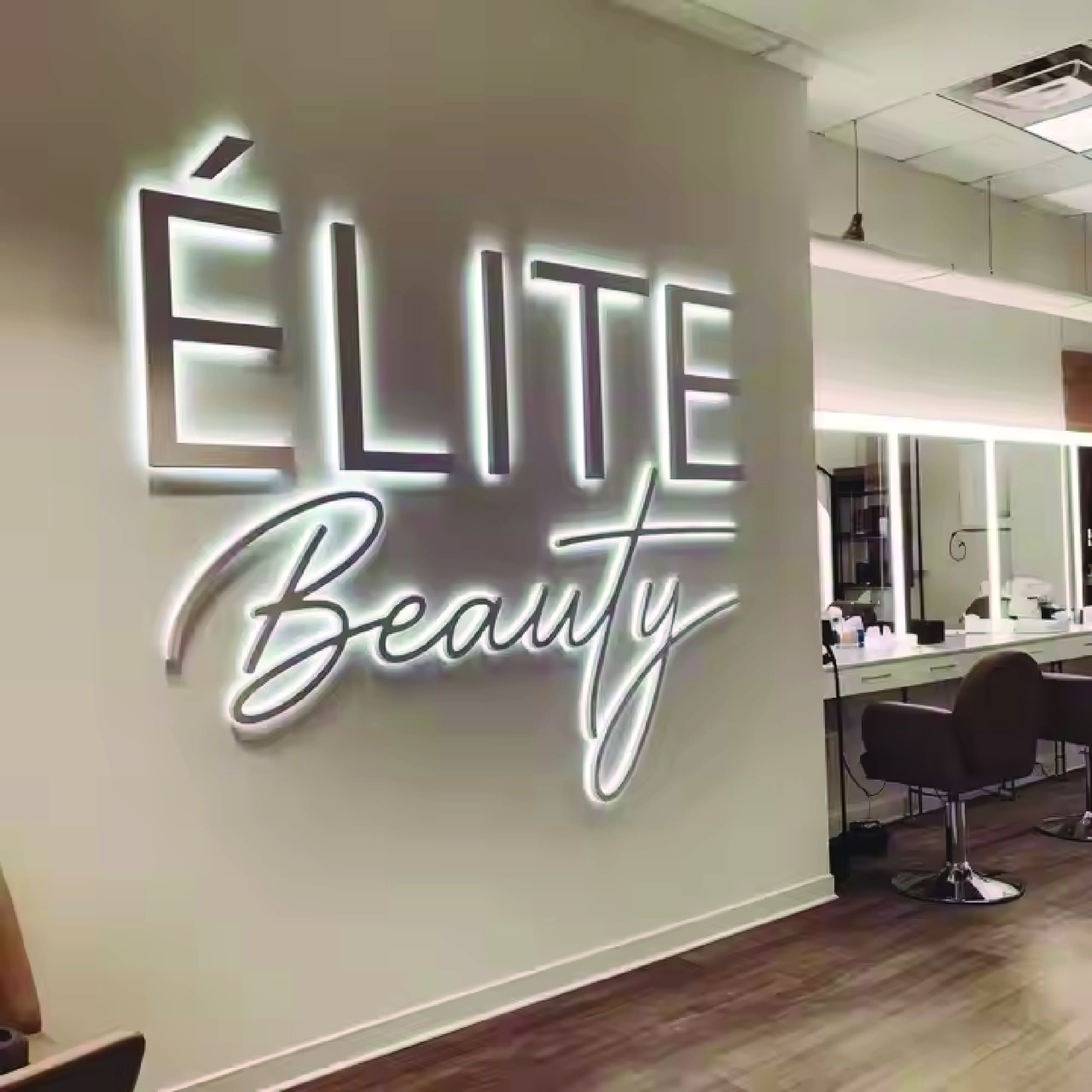
Illumination is one of the most common reasons businesses choose formed 3D letters.LED modules can be positioned inside the letter cavity so that light passes through the formed face.This can turn the same branding into a visible sign during both daytime and nighttime.
Front-Lit Vacuum Formed Letters
With front illumination, light passes through the front face of the letter.This can provide a bright and direct appearance, making it suitable for businesses that need strong nighttime visibility.
Internally Lit Letters
LED modules are positioned inside the formed character.The internal shape and depth of the letter become important because they influence how evenly the light spreads across the face.
Non-Illuminated Formed Letters
Not every application needs lighting.
A non-lit vacuum formed letter can be considered when:
- The sign is mainly viewed during daylight
- External lighting is already available
- The business wants a simpler installation
- Illumination is not required
The final lighting configuration should be selected during the design stage rather than after fabrication.
How Do You Get Even Illumination?
One of the common problems with illuminated 3D letters is uneven brightness.A good result depends on more than simply adding LED modules.
The design should consider:
Letter depth: Too little depth can restrict LED placement.
LED positioning: Modules need to be distributed appropriately inside the cavity.
Face material: Different materials and colours transmit light differently.
Logo geometry: Narrow sections can behave differently from broad letter faces.
Power supply: The electrical system should be appropriately sized for the LED load.
The objective is to create consistent illumination without obvious dark spots or overly bright areas.
Where Can Thermoforming Letters Be Used?
The formed construction can be adapted for many commercial environments.
Storefront Signage
Retail stores can use illuminated vacuum formed letters to display the main brand name above the entrance.
Shopping Malls
Individual stores and commercial units can use formed lettering where a dimensional and illuminated appearance is required.
Restaurants & Cafes
Curved 3D letters can complement modern restaurant façades and provide nighttime visibility.
Corporate Offices
Companies can use formed letters for building names, reception signage branding and selected corporate displays.
Hotels
Hotels can use premium dimensional lettering for entrances, reception areas and selected building signage.
Hospitals
Clear and visible building identification can be created using formed letters where the design and material are suitable.
Commercial Buildings
Large-scale branding can use custom formed characters where the building architecture allows for dimensional signage.
Thermoforming for Outdoor Signage
Vacuum formed letters can be considered for outdoor signage, particularly when the selected material and construction are appropriate for the environment.
The outdoor location should be evaluated for:
- Direct sunlight
- Rain
- Humidity
- Dust
- Pollution
- Temperature changes
- Wind exposure
- Mounting conditions
The current page lists Acrylic and Polycarbonate as suitable for outdoor illuminated signage applications.
However, outdoor performance should not be treated as identical for every material, finish or installation. The actual substrate, thickness, exposure and fabrication should be selected according to the site.
For a fully exposed outdoor project, discuss the exact environment before finalizing the material.
Thermoforming vs Fabricated Metal Letters
If you're deciding between formed plastic letters and metal letters, the main difference is not simply “plastic vs metal”.
It is about the appearance, weight, shape and lighting requirements.
| Factor | Thermoforming / Vacuum Forming | Fabricated Steel Letters |
| Construction | Formed sheet over mould | Fabricated metal |
| Shape | Curved & formed profiles | Cut/bent/fabricated profiles |
| Weight | Generally lighter | Generally heavier |
| Illumination | Well suited to formed illuminated faces | Can be face-lit or halo-lit depending on construction |
| Metallic appearance | Depends on face/finish | Natural metal appearance |
| Large quantity production | Can be efficient with mould | Fabrication for each set |
| Best suited for | Formed 3D illuminated branding | Premium metal & architectural branding |
If your priority is a metallic premium appearance, explore our Steel Letters.
If the design needs a formed, curved or illuminated 3D face, thermoforming may be worth considering.
What Makes Vacuum Forming Different From Flat Acrylic Letters?
A flat acrylic letter is cut from a sheet.
A vacuum formed letter is shaped into three dimensions using a mould.
That difference affects the appearance.
| Flat Acrylic Letters | Vacuum Formed Letters |
| Flat face | Curved / formed face |
| Sheet-cut construction | Moulded construction |
| Limited by flat geometry | Can create formed contours |
| Depth comes from built-up layers | Depth is created through forming |
| Suitable for clean flat designs | Useful for formed 3D shapes |
Neither is automatically better.For a simple logo, flat acrylic may be sufficient. For a curved illuminated letter or larger formed character, vacuum forming can provide a different visual and structural solution.You can also compare the option with our Acrylic Letters page before deciding.
What Can Be Made Using Vacuum Forming?
The process can be used for more than ordinary alphabet letters.
Depending on the mould and design, it can be used for:
- Business names
- Brand logos
- Individual letters
- Numbers
- Symbols
- Custom shapes
- Illuminated channel-style letters
- Large 3D branding elements
For a complex logo, the artwork needs to be evaluated before production because not every graphic can be formed in exactly the same way.
How the Mould Determines the Final Shape
The mould is one of the most important parts of the process.A digital design is first converted into a physical form that can be used for shaping the heated sheet.
The mould determines:
- Letter profile
- Depth
- Curves
- Corners
- Surface shape
- Overall dimensional appearance
The current process specification describes vacuum forming over a CNC-routed mould.This makes accurate mould preparation important, especially when producing multiple letters that need to maintain consistent proportions.
Thermoforming Letter Manufacturing Process
Instead of thinking of production as simply “heat and shape”, it is useful to understand the complete workflow.
1. Artwork Evaluation
Your logo, business name or lettering is checked for suitable forming.
2. Size & Depth Planning
Letter height and required depth are finalized.
3. Mould Preparation
A suitable mould is prepared according to the required 3D shape.
4. Sheet Selection
Acrylic, PETG, HIPS or Polycarbonate can be considered according to the project.
5. Heating
The selected sheet is heated until it reaches a suitable forming condition.
6. Vacuum Forming
The softened sheet is pulled over the mould using vacuum pressure to create the required shape.
7. Trimming
Excess material is removed and the formed letter is prepared for finishing.
8. Lighting Installation
For illuminated designs, LED modules and internal components are installed.
9. Finishing
The letters can receive painted, natural or vinyl-faced treatment depending on the design.
10. Final Inspection
Dimensions, surface appearance, edges, illumination and mounting preparation are checked before installation.
What Finishes Are Available?
The current specification includes painted, natural and vinyl-faced finish options.
Painted Finish
Paint can be used when the lettering needs to match a specific brand colour or design scheme.
Natural Finish
Where the selected sheet provides the desired appearance, a natural material finish may be retained.
Vinyl-Faced Finish
Vinyl can be used for selected colours, graphics or branding requirements.The correct finish depends on the material, whether the letters are illuminated and the final appearance required.
How Large Can Vacuum Formed Letters Be?
The current product specification lists heights from approximately 4 inches to 24 inches or more, with custom sizing available depending on the design.Large letters should not be sized only according to the available wall space.
Consider:
- Viewing distance
- Building or storefront dimensions
- Font thickness
- Letter spacing
- Mounting height
- Road visibility
- Lighting conditions
A well-proportioned 12-inch letter can be more effective than an unnecessarily large letter that overwhelms its surroundings.
How Much Do Thermoforming Letters Cost in Noida?
There is no universal per-letter price because the manufacturing process depends heavily on the design.
The main pricing factors include:
Letter size — Larger characters require more sheet material and larger moulds.
Depth — Deeper letters generally require different forming requirements.
Material — Acrylic, PETG, HIPS and Polycarbonate can have different material costs.
Mould complexity — A simple letter and an intricate logo can require very different mould preparation.
Quantity — Multiple identical letters may allow the same mould to be used across a set.
Lighting — LED modules, power supply and internal installation affect illuminated versions.
Finish — Painting, natural finishing and vinyl facing have different requirements.
Installation — Mounting height, wall condition and accessibility can affect installation requirements.
For a more accurate thermoforming letters price in Noida, share the artwork, approximate size, depth, material preference and installation location.
Is Thermoforming Suitable for Large Quantity Production?
It can be particularly useful when the same or similar 3D form needs to be produced multiple times.Once the mould is prepared, it can potentially be used to form multiple identical components, depending on the material and production requirements.
This can be useful for:
- Retail chains
- Multiple outlets
- Brand rollouts
- Shopping mall stores
- Repeated logo elements
- Standardized corporate signage
The exact production efficiency depends on the design, material, quantity and mould requirements.
How to Choose the Right Material
Instead of selecting the material first, start with the application.
For a Bright Illuminated Storefront
Consider a material that provides suitable light transmission and forming characteristics.
For Outdoor Exposure
Prioritize a material and construction suitable for the site's sunlight, rain and environmental exposure.
For Deep 3D Letters
Check whether the selected sheet can achieve the required depth without compromising the formed shape.
For Complex Logos
The design should be evaluated for corners, narrow sections and forming limitations before production.
For Multiple Locations
A repeatable mould-based process may be useful where consistent branding is required across several sites.
Maintenance of Vacuum Formed Letters
Regular maintenance helps keep illuminated signage looking clean and professional.
For routine maintenance:
- Clean dust and dirt from the letter face.
- Use non-abrasive cleaning materials.
- Inspect visible mounting points.
- Check illuminated letters for uneven brightness.
- Inspect electrical connections where accessible.
- Remove accumulated dirt around the sign structure.
- Check outdoor installations periodically after severe weather.
The required maintenance frequency depends on whether the sign is installed indoors, under cover or in a fully exposed outdoor location.
Design Mistakes to Avoid
Making the Letter Too Thin
A narrow letter can become difficult to read from a distance.
Choosing Excessive Depth
More depth can increase visual impact, but it can also affect material requirements and proportions.
Ignoring Lighting During Design
LED placement should be considered while the letter is being designed and formed.
Using Very Complex Typography
Extremely thin strokes and intricate details may not form consistently.
Selecting Material Only by Price
Material choice affects forming, appearance, illumination and outdoor suitability.
Forgetting the Viewing Distance
The sign should be designed around where your customers will actually see it.
Why Choose Signage Maker?
Custom 3D fabrication
We create thermoformed and vacuum formed letters according to your business name, logo and dimensional requirements.
Multiple material options
The current range includes Acrylic, PETG, HIPS and Polycarbonate.
Custom depth
Available depth ranges from approximately 1 inch to 6 inches, depending on material and size.
Illuminated options
LED front-lit and internally illuminated configurations can be considered for suitable designs.
Custom sizes
Current specifications cover approximately 4 inches to 24 inches or more, depending on the project.
Noida-based manufacturing
Signage Maker is based in Sector 10, Noida and serves businesses across Noida and Delhi NCR.
FAQ
Vacuum formed letters are lighter and significantly faster to produce for large quantities. The smooth formed face provides even light diffusion — ideal for internally illuminated channel letter signs at a lower cost per letter than metal fabrication.
Depth ranges from 1" to 6" depending on the starting material thickness and letter width. Deeper draws require thicker material to maintain wall thickness and prevent thinning at corners.
Yes, Acrylic and polycarbonate are UV-stable and weather-resistant — suitable for long-term outdoor illuminated channel letter signage on shop fronts, petrol stations, and buildings.
LED modules are fitted inside the formed letter cavity and connected to a low-voltage power supply (typically 12V DC) routed through the wall or sign structure. All wiring is concealed for a clean finish.
Yes, We use coloured acrylic sheets in all standard signage colours as the starting material — the colour runs through the full thickness of the letter face, ensuring it glows evenly when illuminated and does not fade at the edges.




Get Your Free Quote Today
Tell us what you need and we'll get back to you within 2 hours with a detailed quote. No obligation, completely free.
+91 8014551455 — Call Now
WhatsApp — Instant Reply
signagemakermkt@gmail.com
Noida, Sector 10 — Serving Delhi NCR
Request a Free Quote
Fill this form and our team will contact you within 2 hours.