
Home > Outdoor and Building Signage > Digital Signage
Digital Signage


| UV Direct Printing / Digital Printing / Reflective Vinyl Applied | |
| Mounting | Wall-mounted / Freestanding / Projecting |
| Size | Custom |
| Finish | Matte / Glossy / Weather-Resistant |
| Applications | Factories / Warehouses / Offices / Construction Sites / Public Facilities |
Digital Signage Solutions in Noida for Smarter Business Communication
Digital communication is changing how businesses talk to customers. Of using only static posters and printed displays businesses can use screens to show videos, promotions, product information, announcements and other content in an engaging way. Signage Maker offers customized signage solutions in Noida for retail stores, offices, restaurants, hospitals, hotels, showrooms, schools and other commercial spaces. Digital communication now includes signage as a key tool.
From a digital display, to a full multi-screen arrangement we help businesses pick the right digital signage solution based on their space brand needs and communication goals.
What Is Digital Signage?
Digital signage is a way to communicate. It uses screens to show pictures, videos, ads, menus, announcements, presentations and other information.
Traditional printed signs stay the same once printed. Digital signage lets you change the display whenever you need.This solution is very handy, for businesses that often change offers, products, prices, menus or marketing campaigns.
Digital signage can be placed in reception areas, storefronts, shops, waiting rooms hallways, showrooms and any place where customers are.
Digital Signage for Businesses in Noida
Every business communicates with its customers differently. A retail store may need promotional displays, while a restaurant may require a digital menu and a corporate office may use screens for internal communication.
Our digital signage can be customized around the purpose, location and audience of your business.
We can help you plan digital display solutions for:
- Retail stores and showrooms
- Corporate offices
- Restaurants and cafes
- Hotels and hospitality spaces
- Hospitals and clinics
- Schools and colleges
- Malls and commercial buildings
- Banks and financial institutions
- Reception and waiting areas
- Exhibitions and events
Make Your Brand More Interactive
A static board communicates one message, but a digital display can communicate multiple messages throughout the day.Businesses can use the screen to show products, special deals, videos, news, company stories and other kinds of pictures and videos.
This ability to change what is displayed makes digital signage a helpful part of how businesses present themselves today.
For example, a showroom can display product videos during the day, promotional offers in the evening and important customer information whenever required.
Our Digital Signage Solutions
Digital Display Screens
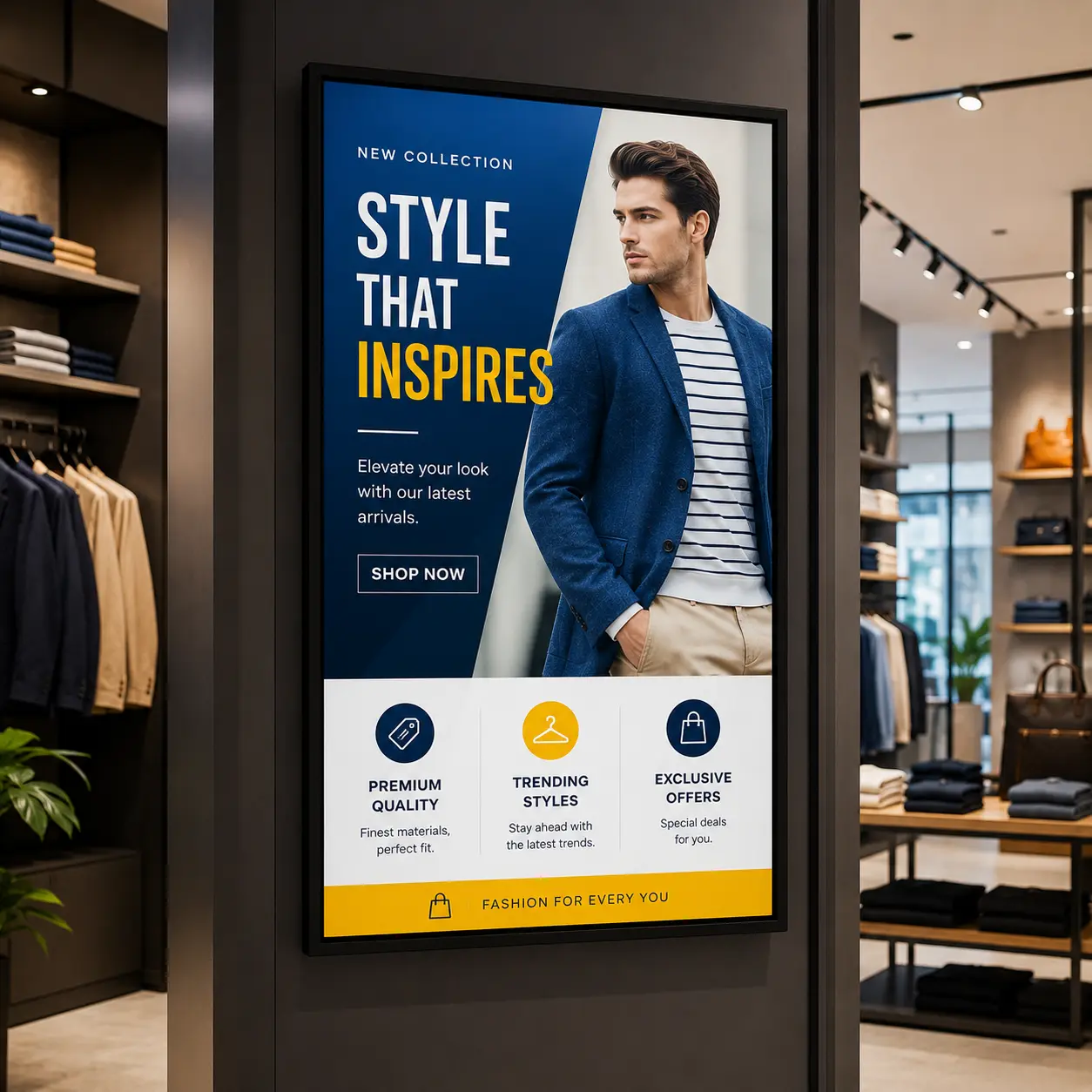
Digital display screens are a choice, for businesses that want to show promotional and informational content in a clear and engaging way. The size of a display screen and the place where it is put can be picked based on how far people will look and how much space is available.
Digital Menu Boards
Restaurants, cafes, food courts and fast food places can use menu boards to show food items, prices, combo offers and ads. Digital menu boards make it easier to update items and offers without having to replace boards. As a visitor to cafes I appreciate how digital menu boards keep menus fresh and exciting.
Video Wall Displays
Video walls combine screens to create a big visual display. Video walls are ideal, for showrooms, corporate offices, control rooms, shopping malls, exhibitions and other places where businesses want a branding or communication area.
Interactive Digital Displays
Interactive displays allow customers or visitors to interact with content. Interactive displays can be used for product information, presentations, directories, educational content and customer engagement.
Floor-Standing Digital Displays
Floor-standing digital displays can be placed in areas where lots of people walk by. Customers can see the information easily. These displays are great for stores that want to show off their products. They work well at events in shopping centers at desks and, during special advertising events.
Indoor Digital Signage
Indoor digital signage is handy, in offices, stores, hospitals, hotels and many other business places. Depending on what's needed indoor digital signage screens can show information, advertisements, directions or brand messages.
For example, digital screens can work alongside reception signage to create a more modern and professional entrance area.
Outdoor Digital Displays
Outdoor digital displays are built for places where businesses want to stand out. They help with advertising, promotions. Sharing important messages with customers. These displays work well in areas where people can easily see them. They are made to handle weather and sunlight. This makes them perfect for streets parking lots or, near stores. Businesses use them to grab attention and share time- information.
The display, enclosure and installation method should be selected according to the location and environmental conditions.
What Can You Display on a Digital Screen?
One of the biggest advantages of digital signage is content flexibility. Depending on your business requirements, you can display:
- Promotional offers
- Product advertisements
- Brand videos
- Product demonstrations
- New product launches
- Menus and pricing
- Corporate presentations
- Announcements
- Event information
- Customer instructions
- Directional information
- Social media content
- Safety messages
- Company news
You can change the content according to your marketing campaign, season or business requirements.
Digital Signage for Retail Stores and Showrooms
Retail businesses need to grab attention. Digital displays work well when placed near entrances, product areas, counters and other busy spots. They help share offers and key product details
In a showroom digital screens can show off product features, run demo videos, highlight promotions and feature customer testimonials. This keeps visitors engaged and informed.
For complete storefront branding, digital displays can also be combined with retail sign boards and other physical signage.
Digital Signage for Restaurants and Cafes
Restaurants and cafés can use screens to display menus, special offers, combo meals and promotional videos. This allows customers to see all options quickly.Digital menu boards are very helpful when prices, menu items or promotions change frequently.
Than printing a new menu board businesses can update the content digitally. This saves time. Reduces waste.
Digital Signage for Corporate Offices
Corporate offices can use digital displays for internal communication as well as visitor-facing information.
Screens can display:
- Company announcements
- Meeting information
- Employee communication
- Presentations
- Brand messages
- Visitor information
- Corporate videos
- Event schedules
Digital displays can be integrated with other office branding elements to create a consistent corporate environment.
Digital Signage for Hospitals and Healthcare Facilities
Hospitals and clinics always need communication. Digital displays can show department details, important announcements, instructions for visitors content, for waiting areas and directions.
In healthcare centers digital screens work alongside traditional signs to help people find departments, rooms and key areas more easily.
Digital Signage for Hotels and Commercial Properties
Hotels, malls and commercial properties can use displays to share information with visitors. These displays can also help promote services, events and businesses that are inside the property.
Digital screens can be set up in places, like reception areas, lobbies, corridors, elevators and other places where a lot of people pass by.
Benefits of Digital Signage
Easy Content Updates
Digital content can be changed without printing and installing a new board. This makes it convenient for businesses that regularly update their information.
Better Customer Engagement
Videos, animations and changing visuals can attract attention and encourage customers to interact with your brand.
Multiple Messages on One Screen
One screen can communicate different messages at different times, allowing businesses to use their display space more effectively.
Supports Video and Animation
Unlike traditional printed signage, digital displays can communicate through motion, video and animation.
Consistent Brand Communication
Businesses can maintain consistent colors, logos, fonts and visual messaging across different locations and screens.
Ideal for Promotions
Digital displays can be updated according to ongoing offers, seasonal campaigns, product launches and special events.
Modern Brand Experience
A professionally planned digital display can give a business environment a contemporary and technology-driven appearance.
Digital Signage vs Traditional Signage
Digital and traditional signage both have their own applications. The right choice depends on what you want the signage to achieve.
| Digital Signage | Traditional Signage |
|---|---|
| Dynamic content | Static content |
| Supports videos and animation | Mainly images and text |
| Content can be updated digitally | Requires physical replacement |
| Multiple messages can be displayed | Usually one fixed message |
| Excellent for promotions | Suitable for permanent identification |
| Interactive options available | Limited interaction |
For many businesses, the best solution is not to choose one over the other but to combine both. Digital displays can handle changing communication while permanent signage provides business identification and branding.
Where Should Digital Signage Be Installed?
The position of your screen can directly affect its visibility and effectiveness. Common installation areas include:
- Store entrances
- Reception desks
- Retail aisles
- Billing counters
- Waiting areas
- Office lobbies
- Restaurant ordering areas
- Hotel reception areas
- Exhibition stalls
- Mall corridors
- Commercial building entrances
Screen size, viewing distance, lighting conditions and customer movement should be considered before finalizing the installation position.
How We Build a Digital Signage Solution
A successful digital signage project starts with understanding how and where the display will be used.
Step 1 – Understand Your Requirement
We first understand your business, location, screen requirement and the type of content you want to display.
Step 2 – Recommend the Display
Based on the application and viewing distance, we help determine a suitable screen size and display configuration.
Step 3 – Plan the Installation
The mounting position, viewing angle, power requirements and surrounding branding elements are considered before installation.
Step 4 – Customize the Branding
Your company logo, colors, graphics and other branding elements can be incorporated into the overall display setup.
Step 5 – Installation
Our team can coordinate the installation of the display according to the project requirements.
Combine Digital Displays with Complete Signage
Digital signage can be more powerful when it is part of a full branding system.
For instance a retail store might use a screen for special offers a acrylic signage board for high-end branding lights on signs, for when it is dark outside and signs that show directions to help shoppers find their way.
This mix helps create an uniform look all around the store.
Why Choose Signage Maker for Digital Signage in Noida?
Signage Maker is a signage manufacturing and branding company located in Sector 10 Noida and Signage Maker serves businesses over Noida and Delhi NCR.
We understand that digital signage is not about installing a screen. Digital signage requires more, than a screen. The display needs to work with your brand, environment and communication requirements.
Our team can assist with:
- Digital signage planning
- Display selection
- Custom branding
- Screen installation
- Indoor digital signage
- Outdoor digital displays
- Digital menu boards
- Video wall solutions
- Commercial display setups
- Integration with other signage
Our experience in physical signage and branding also allows us to create digital displays that work naturally with your existing business branding.
Get Custom Digital Signage Solutions in Noida
Want to make your business communication more engaging and flexible?
Whether you need a digital menu for a restaurant, promotional screens for a retail store, a video wall for a corporate office or digital displays for a commercial property, Signage Maker can help you plan a solution around your requirements.
Share your business location, screen size, installation area or reference design with our team to discuss your digital signage solution in Noida.
Contact Signage Maker today for customized digital signage solutions for your business in Noida and Delhi NCR.
FAQ
Digital signage improves customer engagement in retail by displaying dynamic content such as promotions, product videos, special offers, and interactive experiences. Bright visuals and moving content attract shoppers' attention more effectively than static signs, encouraging them to explore products and make purchasing decisions. Digital displays can also provide personalized and real-time information, creating a more engaging shopping experience.
Digital signage helps businesses save money by reducing the need for printing, shipping, and replacing traditional posters, banners, and promotional materials. Content can be updated instantly across multiple locations without additional production costs. Over time, these savings, combined with increased sales opportunities and improved operational efficiency, make digital signage a cost-effective marketing solution.
Digital signage enhances brand visibility by showcasing high-quality graphics, videos, animations, and branded messaging in a visually appealing format. Businesses can maintain consistent branding across multiple locations and update campaigns quickly to stay relevant. Eye-catching digital displays help brands stand out, improve recognition, and leave a lasting impression on customers.
Digital signage is beneficial for a wide range of businesses, including retail stores, shopping malls, restaurants, hotels, corporate offices, hospitals, schools, airports, banks, and entertainment venues. Any organization that needs to communicate information, promote products, improve customer experiences, or strengthen brand awareness can benefit from digital signage solutions.
Digital signage offers greater flexibility and impact compared to traditional advertising methods such as printed posters and banners. Content can be updated instantly, scheduled remotely, and customized for specific audiences or times of day. Unlike static advertisements, digital signage uses motion, video, and interactive features to capture attention, resulting in higher engagement and more effective communication.
RELATED CATEGORIES



Get Your Free Quote Today
Tell us what you need and we'll call you back within 2 hours and share a detailed quote within 24 hours. No obligation, completely free.
+91 8014551455 — Call Now
WhatsApp — Instant Reply
signagemakermkt@gmail.com
Noida, Sector 10 — Serving Delhi NCR
Request a Free Quote
Fill this form and our team will contact you within 2 hours.